Hooks That Hold: How to Write the First 3 Seconds of a Short (25 Templates Inside)
Why the first seconds decide a short's reach, the five hook types that work for clips, 25 fill-in-the-blank templates, and the mistakes that make viewers swipe.
By the Salvo Team
5 min read
Updated
On this page
On TikTok, Shorts and Reels, nobody chose to watch your clip. It just appeared, and their thumb is already moving. The hook is the bit that makes them stop: the first line spoken, the text on screen, the first frame. Get it right and the rest of the clip gets a chance. Get it wrong and nothing after it matters.
This is a practical guide to writing hooks for clips: why they matter, the types that work, 25 templates to steal, and how to find out which one wins instead of guessing.
Why the first seconds decide everything
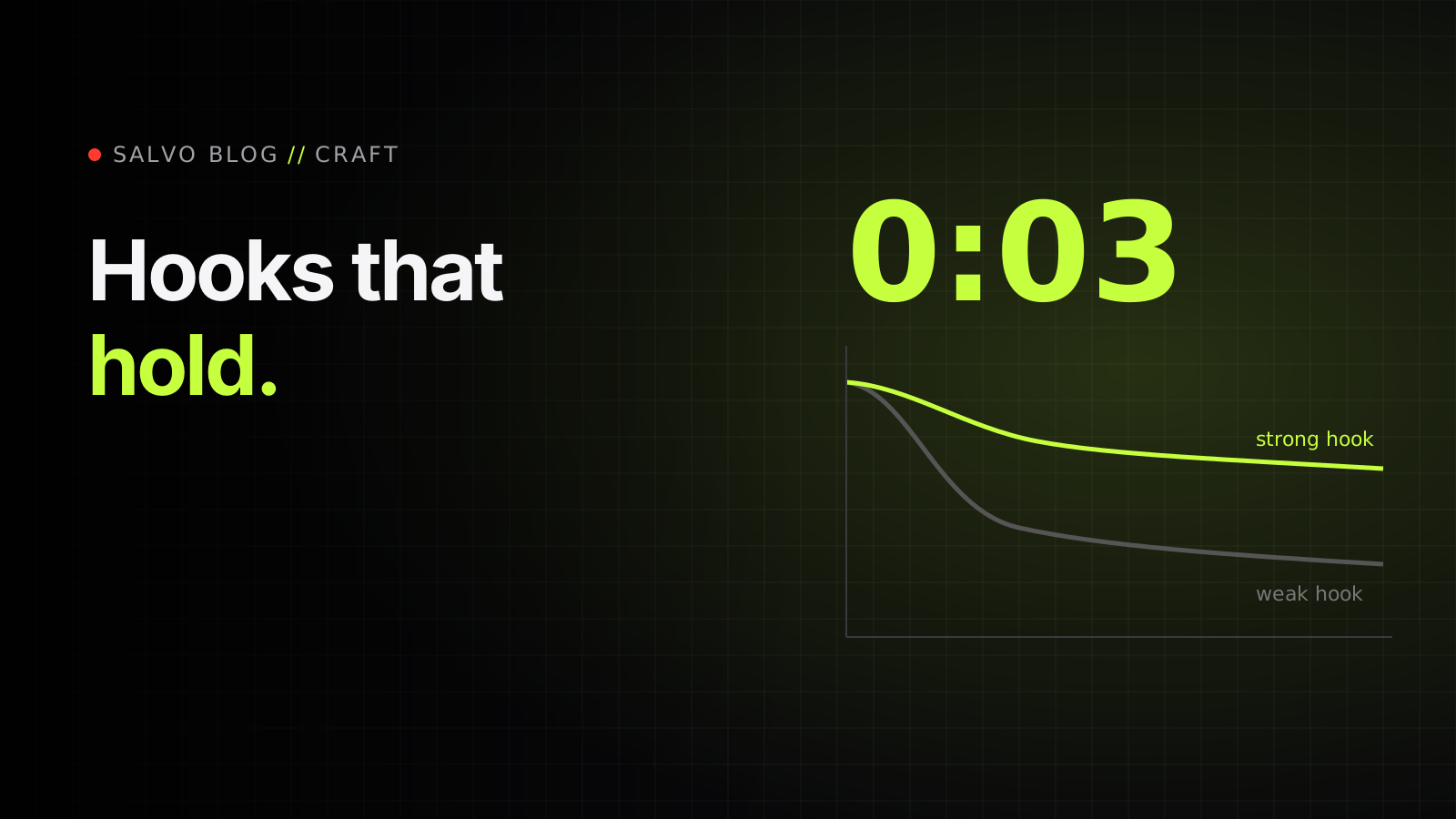
Short-form feeds recommend videos based on how viewers respond to them. If lots of people swipe away immediately, the clip stops getting shown. If they stay, it gets tested on more people. YouTube even shows this directly: Shorts analytics has a "viewed vs. swiped away" number for each Short.
There isn't much official data on organic hooks, but TikTok has published some for ads. In a 2020 TikTok for Business post, TikTok said over 63% of the ads with the highest click-through rates highlighted their key message or product within the first three seconds. Ads aren't clips, but the lesson carries over: say why someone should care, immediately.
The anatomy of a hook
A clip's hook has three layers, and the best clips use all three:
- The visual hook: the first frame. Motion, a face mid-reaction, something unexpected. Never a black frame or a slow zoom on nothing.
- The text hook: the line on screen, usually at the top. It sets up the clip in under ten words.
- The spoken hook: the first thing said. When you clip, you choose where the clip starts, so you choose this line too.
The text and spoken hooks shouldn't say the same thing. If the speaker says "I lost everything that night", the text can add context: "He bet his whole stream on one round."
Five hook types that work for clips
1. The open loop
Promise something the viewer only gets by staying. "Wait for what chat does at the end." It works because people want to see how it ends, so the payoff has to arrive.
2. The bold claim
A strong, specific statement. "This is the worst trade in the history of the game." Specific beats vague: "worst trade" is fine, "worst trade in 12 years" is better, if it's true.
3. The question
Ask something the viewer has an opinion on. "Would you take $10k or the mystery box?" Questions also tend to get comments, because people want to answer.
4. The stakes
Show what's at risk. "Last round. Whole tournament on this shot." Stakes work especially well for gaming and sports clips.
5. The reaction-first
Start on the peak (the scream, the laugh, the stunned silence) and then rewind to the setup. "Chat lost it at 3:12" over the reaction, then cut back. This is the classic streamer clip, and it still works because the reaction is the proof that something happened.

25 hook templates
Fill in the blanks with what's actually in the clip. A hook that promises something the clip doesn't deliver will hurt you more than a boring one.
Open loops
- Wait for what [person] says at the end.
- Nobody expected [thing] to happen next.
- Watch [person]'s face when [event].
- This is how [event] actually went down.
- The last 5 seconds of this are [adjective].
Bold claims
- This is the [superlative] [thing] I've ever seen.
- [Person] just said what everyone's been thinking about [topic].
- Nobody talks about this part of [topic].
- [Common belief] is wrong, and here's why.
- This [thing] changed how I think about [topic].
Questions
- Would you [choice A] or [choice B]?
- Is [person] right about [topic]?
- What would you do if [situation]?
- How did nobody notice [thing]?
- Why does [thing] keep happening to [person]?
Stakes
- [Number] seconds left, [stake] on the line.
- One mistake and [consequence].
- He had one shot to [goal].
- [Amount] riding on this [round/bet/decision].
- If this fails, [consequence].
Reaction-first
- Chat lost it at [timestamp].
- The moment [person] realised [thing].
- [Person] was NOT ready for this.
- That's the face of someone who just [event].
- The room went silent after this.
Mistakes that make people swipe
- Starting too early. If the good part is at 0:08, start the clip at 0:07, not 0:00.
- Clickbait that doesn't pay off. Viewers who feel tricked swipe faster next time, and some platforms count that against you.
- Walls of text. If the hook needs two lines to read, it's too long. Aim for under ten words.
- Hiding the face. On streams, a tiny facecam under the gameplay hides the reaction, and the reaction is often the whole hook.
- Same hook, every clip. "Wait for it" on every post trains your audience to scroll past.
Don't guess: test
You can write five good hooks for the same clip and still not know which one wins. Different audiences react to different angles, and the only reliable way to find out is to post them and compare.
The basic method:
- Make two to five versions of the clip that differ in only the hook.
- Post them on different accounts at similar times, so they don't compete with each other.
- Compare early retention (how many people are still watching a few seconds in) and click-through, not just total views.
- Keep the winner, and write down why you think it won. Over time those notes become your own playbook.
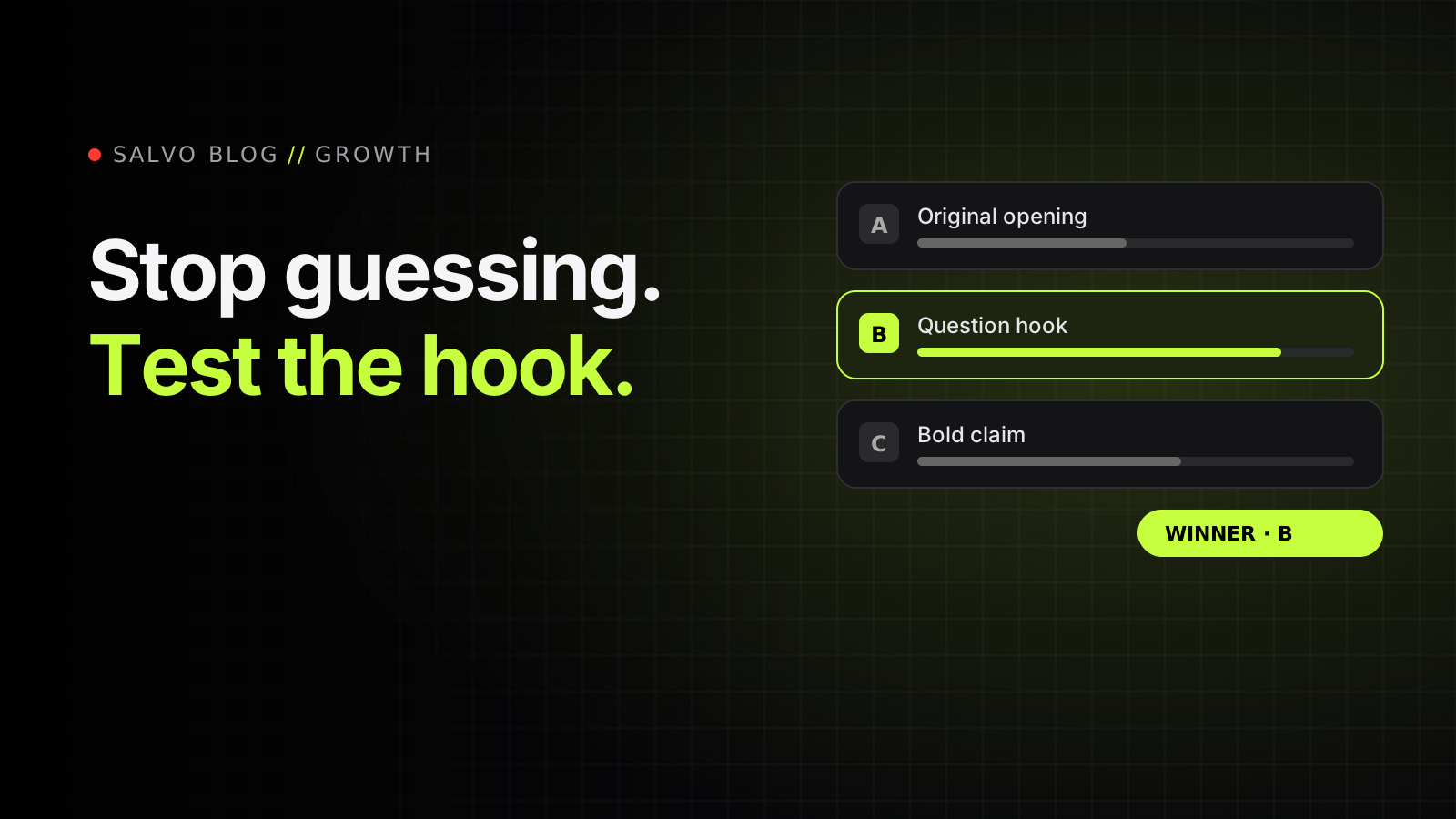
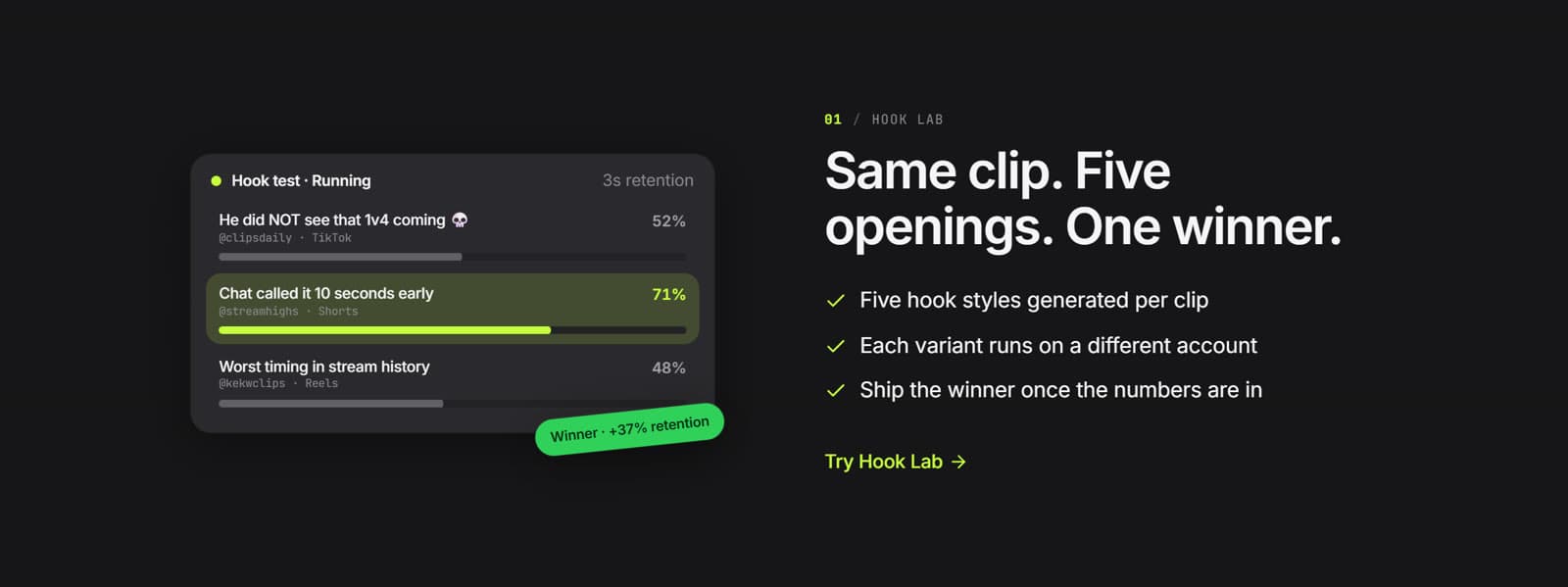
Doing that by hand is a lot of spreadsheet work. Salvo's Hook Lab generates alternative hooks from the clip's transcript, posts each version to a different account and picks the winner from real retention and click-through numbers. Then you apply it with one click.
Quick reference
- The first frame, the on-screen text and the first spoken line are all hooks.
- Say why the viewer should care in the first second or two.
- Use open loops, bold claims, questions, stakes or reaction-first, and always deliver what you promise.
- Under ten words on screen.
- Test versions on different accounts and judge by retention, not just views.
Hooks are a skill, not a talent. Write five for every clip, test the best two, and within a month you'll have a feel for what works in your niche. For the testing side, read how to A/B test hooks.